

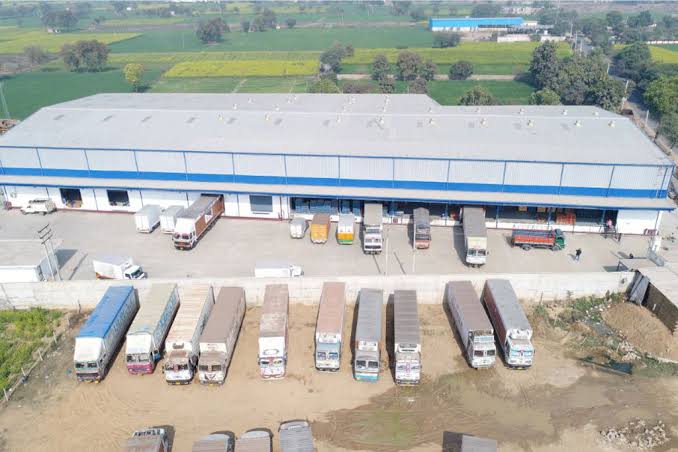
Over the past few years, warehousing has evolved rapidly: increased throughput, shorter delivery windows, and the necessity to scale more space without halting operations. This is why steel pre-engineered buildings (PEBs) have become the one-stop solution to modern logistics and industrial storage. A prefabricated warehouse building is not temporary construction; it is a factory-optimised structure that is fast, accurate, and consistent.
Why PEB warehouses win on time and predictability
In a traditional construction, most tasks are performed in sequence on-site. In PEBs, site preparation, fabrication, and design occur simultaneously. Structural members are fabricated under controlled environments, shipped to be assembled by bolts in the field, a process that minimises rework at the site and material waste and condenses the construction timeline. General cost savings in large-span warehouses, many industry experts also report, are due to optimization of steel use and less labour time on-site.
Anatomy of a warehouse PEB
In order to analyse any warehouse peb structure, it is useful to know the key elements. The majority of systems are structured around:
- Primary framing (major rigid frames/columns/rafters which support significant loads)
- Secondary members (purlins, girts, and bracing that support cladding and give stability)
- Wall and roof sheeting, insulation choices, skylights/ventilators, and accessories.
This modular design enables easier matching of engineering with functional requirements such as clear internal spans of racking, mezzanine, crane provisions, dock canopies or future bay expansions.
Operational advantages you feel every day
The prefab warehouse to be designed is not just about building faster. It’s about running better:
- Clear-span interiors enhance the forklift movement and racking schemes.
- Lighter superstructures have the potential of lowering foundation requirements (project-specific).
- The process of expansion is easier: it is often easy to add length bays or annexes without causing much disturbance.
- Steel can be easily recycled and insulated panels can assist in alleviating cooling demand in hot climates.
What drives cost (and how to control it)
In addition to floor area, there are clear height, bay spacing, design loads (wind/seismic), crane considerations, roof slope, insulation thickness, dock considerations and fire-safety considerations. Site issues are also important: foundations and erection logistics might be affected by the site’s bearing capacity, drainage, and accessibility of trailers and cranes. Optimum results are achieved when the warehouse layout, racking plan, and MEP routing are locked; early-late changes will carry over into frame weight, cladding quantities and connection detailing.
What to ask before you sign off
Not every PEB is the same thing and due diligence is an issue. In comparing PEB warehouse manufacturers, request:
- Design basis: wind/seismic assumptions and codes used (in India, it is common to design steel to IS 800:2007 plus appropriate loading standards).
- Connection detailing and corrosion protection (paint system/galvanizing where necessary).
- Material traceability, fabrication tolerances and weld quality controls.
- Cladding and insulation requirements (U-values, fire performance, condensation control).
- Bolt tensioning, alignment, and plumb checklists and methodology.
A practical path to the right solution
Begin by writing down your type of storage (pallet racking, bulk, cold chain, FMCG, auto parts), target clear height, bay separation, and docking plan. Then take a partner who can design about your operations–not bend your operations to the building. MECHFAB maintains the emphasis on engineered efficiency: design that predicts growth, steel optimization, and a clean, maintainable envelope, so your warehouse works on day one and remains flexible over the years.
Prior to fabrication, verify GFC drawings, anchor-bolt plans, and approval timelines. When a coordinated checklist is used, it helps your team to stay on schedule and avoid any surprises.


