

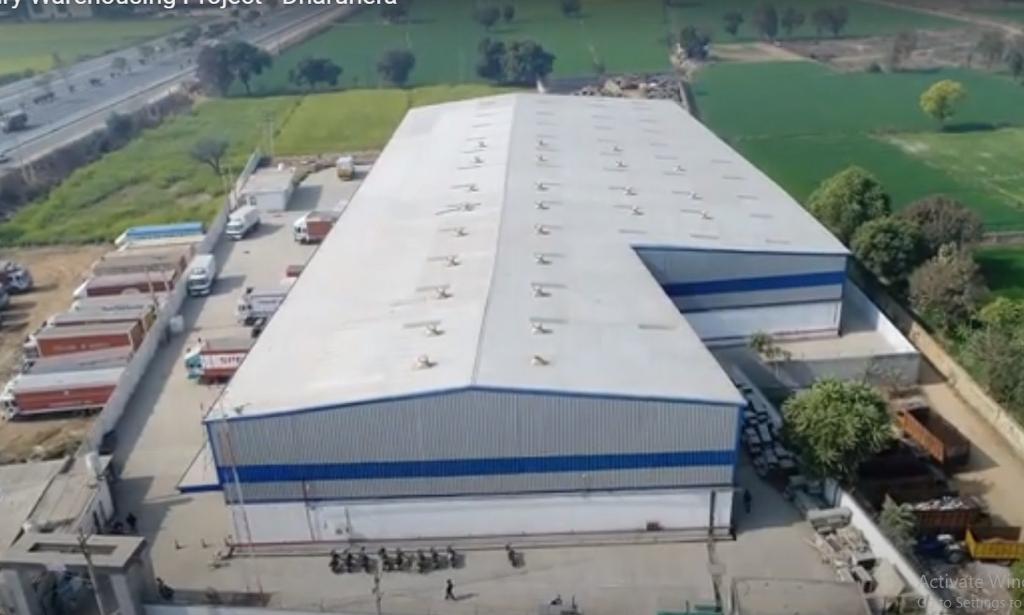
The warehousing and distribution systems in India are developing at a rapid pace- driven by e-commerce, cold-chain development, and next-day delivery demands. The bottleneck cannot be the building itself in such an environment. This is why increasing numbers of developers and operators are considering the use of PEB logistic building solutions, which are designed to meet speed, scale and operational efficiency.
What makes pre-engineered logistics buildings different?
A contemporary pre-engineered metal building is created and produced in large part off-site in a regulated factory setting, and then exported to be assembled efficiently on-site. This method minimises site variability and assists in keeping projects predictable, an advantage in a tight timeline and with the ever increasing land costs.
Layouts in the logistics that facilitate flow are the largest wins: receiving, put-away, storage, picking, staging, and dispatch. Planned pre engineered logistic building may also be formulated with respect to clear spans, bay spacing, eave height, and roof slope to accommodate racking systems, forklift traffic, dock location, and future growth.
Why logistics operators prefer PEB for warehouses
1) No discontinuities in movement.
Logistics works well on open floor plates. Broad, clear spans will help in streamlining racking, automation and travel routes, particularly with the changing operations over time.
2) Rapid construction with reduced disturbance.
Since key structural components are also pre-fabricated and assembled on-site, the project timeline is often shortened compared to traditional approaches, which facilitates business start-up sooner and carries less cost.
3) Intended to be vertical efficiency.
Huge warehousing is becoming the norm. Facilities with high-bays are usually advised to maintain clear heights of approximately 10-12 meters with the goal of facilitating effective racking and automation. That vertical utilization can be designed into that prefab logistic building on day one, instead of retrofitting it later.
The anatomy of a reliable logistics structure
Smart engineering and the correct components make performance:
- Primary framing (rigid frames, columns, rafters) supports core loads and transfers them to the foundation.
- Secondary framing (girts and purlins) is used to support cladding and assist in the distribution of loads.
- Envelope of roof and walls can be chosen based on climate, operating temperature, and energy objectives.
Where control of temperature is needed, such as with chilled storage or pharma or comfort-conditioned packing areas, insulated sandwich panels are popular. The panels have metal skins with an insulated core (usually polyurethane/PUF) to enhance thermal performance and save on energy use.
Designing for today—and for growth
A logistics facility is not fixed. With route optimisation, SKU profiles are modified, automation is enhanced, and dock patterns are adjusted. This is why the future-ready plan has to be the beginning of the best projects: column spacing that allows racking flexibility and dock positioning that minimises cross-traffic, and office/mezzanine integration that does not disrupt the primary workflow.
A PEB logistics structure, when properly implemented, can be more than a mere shell: faster commissioning, smoother operations, and less hassle in going global.
When you are considering the next warehouse and need a contemporary approach to building a logistics facility, MECHFAB is a company you should consider whenever you want a logistics building that focuses on speed, strength, and scalability.


