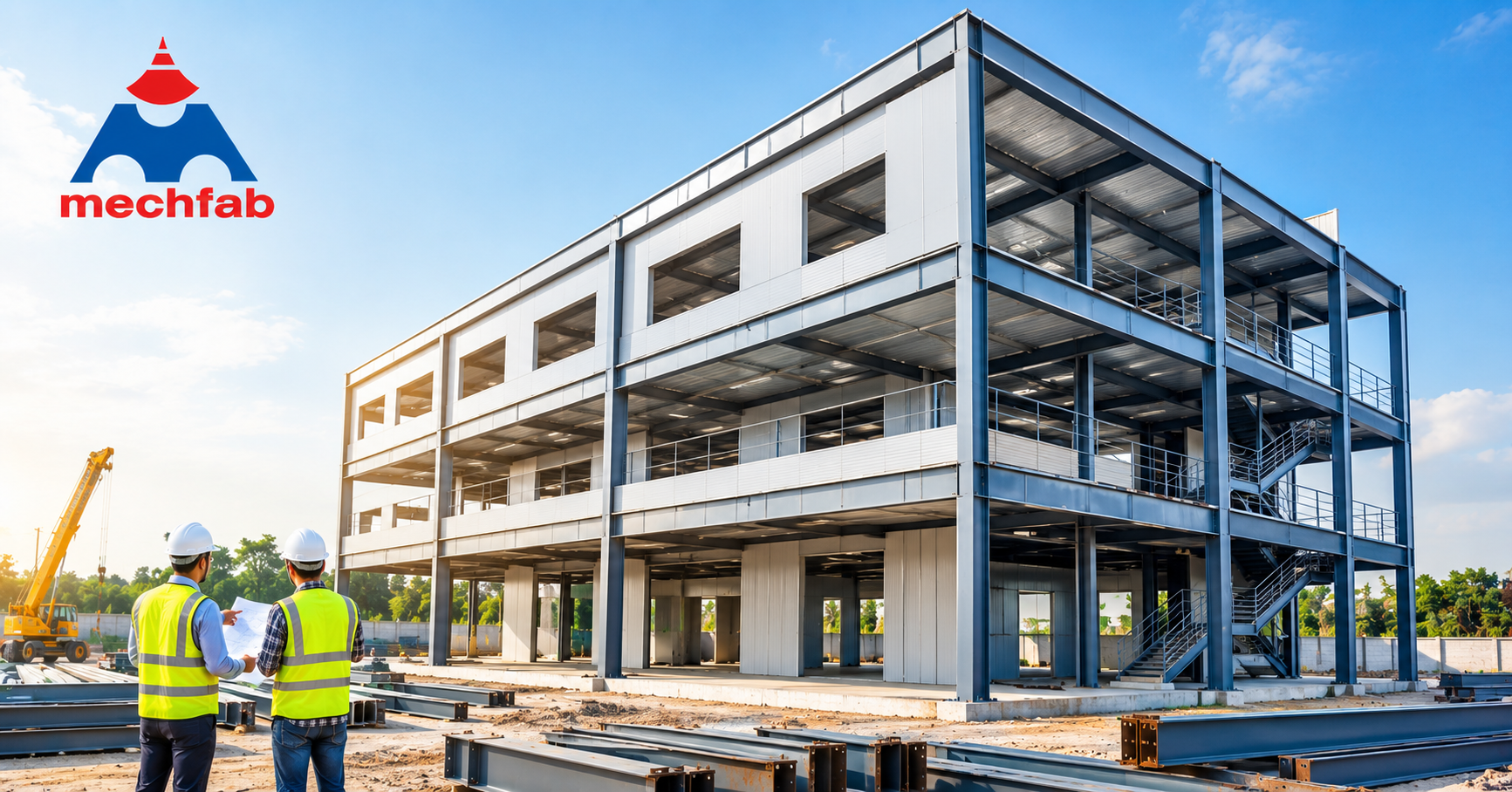


The logistics and supply chain industry is evolving rapidly, driven by e-commerce growth, automation, and increasing customer expectations. To keep pace with these changes, businesses are investing in modern industrial warehouses designed for efficiency, scalability, and sustainability.
Today’s warehouses are no longer just storage facilities. They have become strategic assets that help organizations streamline operations, reduce costs, and improve delivery performance. As a result, innovative warehouse design trends are transforming the logistics sector across India and globally.
In this article, we explore the key industrial warehouse design trends shaping the future of logistics.
1. Pre-Engineered Building (PEB) Warehouses Are Becoming the Preferred Choice
One of the biggest trends in warehouse construction is the adoption of Pre-Engineered Buildings (PEB). Compared to traditional construction methods, PEB warehouses offer faster project completion, lower construction costs, and superior structural performance.
Benefits of PEB Warehouses:
- Faster construction timelines
- Reduced maintenance requirements
- Large column-free spaces
- High durability and strength
- Easy future expansion
These advantages make PEB structures ideal for logistics parks, distribution centers, and industrial storage facilities.
2. High-Clearance Warehouse Designs
Modern logistics operations require efficient storage solutions. High-clearance warehouse designs maximize vertical space and accommodate advanced racking systems.
Key Features:
- Increased storage capacity
- Better inventory management
- Improved material handling efficiency
- Optimized operational workflow
Businesses can store more inventory within the same footprint, reducing overall warehousing costs.
3. Smart Warehouse Integration
Technology is playing a critical role in warehouse design. Modern warehouses are being built with infrastructure that supports automation and smart technologies.
Common Smart Warehouse Features:
- Warehouse Management Systems (WMS)
- RFID Tracking Systems
- Automated Storage and Retrieval Systems (ASRS)
- IoT-enabled monitoring
- Real-time inventory tracking
These innovations improve productivity while reducing operational errors.
4. Sustainable and Energy-Efficient Construction
Sustainability has become a priority for logistics companies. Modern warehouse designs now incorporate environmentally friendly features that lower energy consumption and operating costs.
Sustainable Design Elements:
- Solar rooftop systems
- Natural ventilation
- Energy-efficient LED lighting
- Rainwater harvesting
- Insulated roofing systems
Green warehouse construction not only benefits the environment but also delivers long-term cost savings.
5. Flexible and Scalable Warehouse Layouts
Businesses today need infrastructure that can adapt to changing market demands. Flexible warehouse designs allow companies to expand or modify operations without major structural changes.
Advantages:
- Easy expansion capability
- Improved space utilization
- Reduced renovation costs
- Better long-term investment value
PEB warehouses are particularly suitable for scalable industrial infrastructure projects.
6. Enhanced Safety and Compliance Standards
Warehouse safety is a critical aspect of modern logistics operations. New industrial warehouse designs focus on creating safer working environments.
Safety Features Include:
- Fire protection systems
- Emergency exits
- Wide loading and unloading bays
- Anti-slip flooring
- Structural safety compliance
A well-designed warehouse reduces workplace risks and supports regulatory compliance.
7. Dedicated Logistics and Distribution Zones
Modern warehouses are increasingly designed to support faster movement of goods. Dedicated zones for receiving, sorting, packing, and dispatching improve operational efficiency.
Benefits:
- Reduced material handling time
- Faster order fulfillment
- Better workflow management
- Increased productivity
This trend is especially important for e-commerce and third-party logistics (3PL) companies.
8. Multi-Functional Warehouse Facilities
Warehouses are evolving into integrated logistics hubs. Modern facilities often combine storage, distribution, office space, and value-added services within a single structure.
Multi-Functional Features:
- Administrative offices
- Loading docks
- Inventory management areas
- Packaging units
- Distribution centers
This integrated approach improves coordination and reduces operational costs.
Why Modern Warehouse Design Matters for Logistics
Efficient warehouse design directly impacts supply chain performance. Companies investing in modern industrial warehouse solutions benefit from:
- Faster order processing
- Lower operational costs
- Improved inventory control
- Better space utilization
- Enhanced customer satisfaction
- Greater scalability for future growth
As logistics networks continue to expand, warehouse infrastructure will play an increasingly important role in maintaining competitive advantage.
Conclusion
Industrial warehouse design is undergoing significant transformation as businesses seek greater efficiency, flexibility, and sustainability. Trends such as PEB construction, smart automation, energy-efficient systems, and scalable layouts are redefining how warehouses support logistics operations.
Organizations that invest in modern warehouse infrastructure today will be better positioned to meet future market demands, improve operational performance, and achieve long-term growth.