
Introduction
In today’s rapidly evolving industrial landscape, businesses are constantly looking for ways to reduce costs while improving efficiency and scalability. Infrastructure plays a crucial role in achieving these goals. This is where steel structure buildings have emerged as a game-changing solution.
Unlike traditional concrete construction, steel buildings offer speed, flexibility, durability, and most importantly—cost efficiency. With the rise of Pre Engineered Buildings (PEB), industries can now construct high-quality facilities in a fraction of the time and cost. Companies like GMF PEB are at the forefront of delivering innovative steel building solutions tailored to modern industrial needs.
What is a Steel Structure Building?
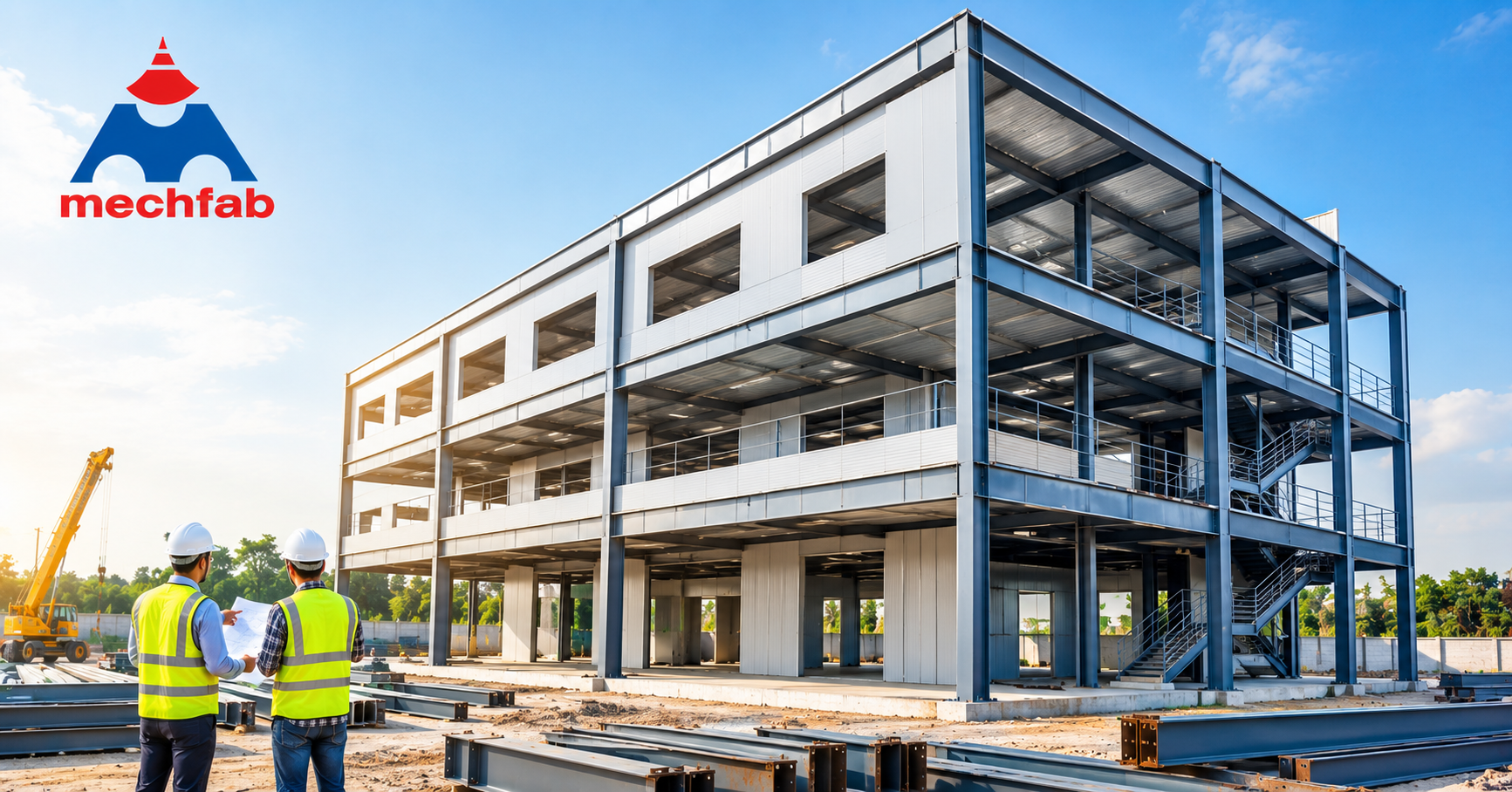
A steel structure building is a construction system where the main framework is made of high-strength steel components. These components are designed, engineered, and fabricated in a controlled factory environment and then transported to the construction site for assembly.
This method is commonly known as a Pre Engineered Building (PEB) system. It ensures precision, reduces errors, and speeds up the overall construction process. Steel buildings are widely used for warehouses, factories, logistics hubs, commercial spaces, and even multi-storey structures.
Why Steel Structure Buildings are Cost-Effective
1. Faster Construction Time
Time is money in any industrial project. Steel structure buildings are significantly faster to construct compared to traditional methods. Since most of the components are pre-fabricated in factories, on-site work is minimized.
Projects that would typically take several months using conventional construction can often be completed in weeks with steel structures. This faster turnaround reduces labor costs and allows businesses to start operations sooner, leading to quicker returns on investment.
2. Reduced Material Wastage
Steel buildings are based on precise engineering and accurate measurements. Every component is manufactured according to exact specifications, which minimizes material wastage.
In contrast, traditional construction often involves excess material usage and on-site adjustments, which increase costs. With steel structures, optimized material usage directly translates into cost savings.
3. Lower Foundation Costs
Steel is lighter than traditional concrete structures. This reduced weight means that the foundation required for a steel building is less heavy and less expensive.
Lower foundation costs are particularly beneficial in areas with weak soil conditions, where heavy foundations can significantly increase project expenses.
4. Minimal Maintenance Costs
Steel structure buildings require very little maintenance compared to conventional buildings. High-quality steel is resistant to pests, termites, and rot. Additionally, modern coatings protect steel from corrosion and environmental damage.
Over the long term, this durability reduces repair and maintenance costs, making steel buildings a more economical choice.
5. Energy Efficiency and Sustainability
Modern steel buildings are designed with energy efficiency in mind. They can be easily insulated, which helps maintain internal temperatures and reduces energy consumption.
Steel is also a recyclable material, making it an environmentally friendly option. Many industries today prefer sustainable construction methods, and steel structures align perfectly with these goals.
Key Advantages of Steel Structure Buildings
Flexibility in Design
Steel allows for large clear spans without internal columns. This creates open spaces that are ideal for warehouses, manufacturing units, and logistics centers.
Easy Expansion
One of the biggest advantages of steel buildings is their scalability. Industries can easily expand their facilities by adding more sections without disrupting existing operations.
High Strength and Durability
Steel has a high strength-to-weight ratio, making it capable of withstanding harsh weather conditions, including heavy winds and seismic activity.
Precision and Quality Control
Since components are manufactured in factories, quality control is much higher compared to on-site construction. This ensures consistency and reliability.
Applications in Modern Industries
Steel structure buildings are widely used across various sectors due to their versatility and cost efficiency.
- Warehouses and Logistics Centers: Large open spaces and quick construction make steel ideal for storage and distribution.
- Manufacturing Units: Strong structures support heavy machinery and industrial operations.
- Commercial Buildings: Offices, showrooms, and retail spaces benefit from modern steel designs.
- Agricultural Buildings: Storage facilities, barns, and processing units are commonly built using steel.
- Infrastructure Projects: Airports, metro stations, and hangars increasingly use steel structures.
Companies like GMF PEB specialize in delivering customized solutions for these diverse industrial applications.
Steel Structure vs Traditional Construction
| Factor | Steel Structure Building | Traditional Construction |
|---|---|---|
| Construction Time | Fast | Slow |
| Cost | Cost-effective | Expensive |
| Flexibility | High | Limited |
| Maintenance | Low | High |
| Environmental Impact | Eco-friendly | Less sustainable |
This comparison clearly shows why steel buildings are becoming the preferred choice for modern industries.
Future of Steel Structure Buildings in India
India’s industrial growth is driving the demand for faster and more efficient construction methods. With initiatives like “Make in India” and increasing investments in infrastructure, the adoption of steel structure buildings is expected to grow rapidly.
The demand for warehouses, logistics hubs, and manufacturing facilities is also increasing due to the rise of e-commerce and global trade. Steel buildings provide the ideal solution to meet these demands quickly and efficiently.
Conclusion
Steel structure buildings have revolutionized the way modern industries approach construction. Their ability to reduce costs, speed up project timelines, and provide long-term durability makes them a smart investment.
As industries continue to evolve, the need for flexible, scalable, and sustainable infrastructure will only increase. Steel structure buildings, especially PEB systems, are perfectly positioned to meet these requirements.